

What Is a Microgrid? How It Works, Benefits, Applications and What to Consider
Microgrids are becoming a bigger part of the energy conversation, especially in remote, regional and resilience-focused applications. In simple terms, a microgrid is a local energy system that can generate, store and manage electricity for a defined group of loads. Unlike a standard grid connection, a microgrid operates as a controllable local system, and in many cases it can continue operating even when the wider grid is unavailable. This makes microgrids relevant across a wide range of Australian applications, from remote communities and commercial sites to industrial operations and critical infrastructure.
They are no longer only relevant to utilities or large campuses. Developers increasingly consider them for remote communities, mines, farms, commercial sites and construction projects. In Australia, that relevance is reinforced by ARENA’s Regional Microgrids Program, which supports the development and deployment of renewable energy microgrids across regional Australia.
This guide explains what a microgrid is, how it works, where it fits, what benefits it can offer, and what needs to be considered before adopting one.
What is a microgrid?
A microgrid is not just a set of components installed on the same site. It is an integrated local power system with defined loads, generation sources, storage, controls and protection, all working together within a clear electrical boundary. The system may connect to the main grid under normal conditions, or it may operate fully off-grid from day one.
In practice, a microgrid may power a remote community, an industrial site, a campus, a construction compound, a mining village or a group of critical buildings. Some microgrids disconnect from the wider network when needed. Others never connect to it at all. The Victorian Government’s microgrids overview gives a simple local description of microgrids as a small subset of the electricity grid that provides local generation and storage.
If you are new to stand-alone power more broadly, it can also help to first understand the basics of an off-grid system.
How does a microgrid work?
At a high level, a microgrid coordinates local power sources and loads so the site can operate as a stable system. Depending on the design, it can include solar PV, battery storage, diesel or gas generators, inverter-chargers, controllers, switchgear and protection equipment.Most microgrids include the same core building blocks. The U.S. Department of Energy’s microgrid overview and its energy storage briefing on microgrids both describe the importance of generation, storage, loads, controls and protection in creating a stable local power system.

Loads
These are the buildings, circuits, equipment or processes the microgrid is designed to supply. Some projects supply all site loads. Others split critical and non-critical loads so the most important services stay online during outages or constrained conditions.
Distributed energy resources
These are the local power sources. They can include solar PV, wind, combined heat and power, generators and other distributed generation technologies.
Energy storage
Battery storage often plays a central role because it helps absorb excess renewable generation, smooth fluctuations, support black start capability and reduce generator runtime.
Controls
Controls are what make a microgrid a controllable system rather than just a collection of equipment. They manage how assets interact, when generators start, how batteries charge and discharge, how the system responds to grid loss, and how overall stability is maintained.
Protection and switchgear
Microgrids also need protection schemes and switching arrangements that suit their operating modes. This becomes especially important where a system can island, reconnect, or serve multiple customers.
Grid-connected vs off-grid microgrids
One reason the term “microgrid” can cause confusion is that it covers more than one type of system.
A grid-connected microgrid operates alongside the wider electricity network under normal conditions. It can also disconnect and keep powering local loads when the main grid goes down or becomes unstable. Operators often use this setup for resilience, peak management or energy cost control.
An off-grid microgrid does not connect to the utility network at all. It must generate and manage its own power continuously using on-site resources such as solar, batteries and generators. This is common in remote communities, islands, industrial operations and other locations where grid extension is impractical or too expensive.
What are the main benefits of a microgrid?
The right microgrid can deliver several important benefits, but those benefits still depend on good design, suitable load profiles and realistic operating assumptions.
Improved resilience
People often discuss microgrids in the context of resilience because they can keep serving local loads when the wider grid fails. They can also provide redundancy in remote off-grid environments. Islanding capability is one of the defining characteristics of a microgrid.
Better use of local energy resources
Microgrids can combine local solar, storage and other distributed energy resources in a coordinated way, helping sites reduce reliance on imported energy or diesel-only operation.
Potential fuel and operating cost reductions
Where diesel generation would otherwise do most of the work, hybrid microgrids with solar and batteries can reduce fuel use, generator runtime and maintenance demands. The exact savings depend on solar resource, battery sizing, load shape, dispatch logic and site conditions.
Flexibility for staged growth
Some microgrids can expand over time as loads increase, which is valuable for growing sites, staged construction, temporary operations and changing commercial needs. Whether that is practical depends on the architecture chosen and the limits of the platform.
Better local control
For some sites, the value is not just lower fuel use. It is the ability to control local generation, maintain service to critical loads and improve energy security where the edge of the grid is weak or unreliable.
Where are microgrids used?
Many sectors use microgrids, but the use case still shapes the design.
Remote and regional communities
This is one of the clearest Australian applications. ARENA’s program was set up to support renewable microgrids in regional Australia, with stream outcomes focused on improved resilience, reliability and barrier reduction. The broader Australian regulatory discussion around stand-alone power systems also reflects the relevance of microgrids in remote and edge-of-grid settings.
Campuses and critical facilities
Hospitals, defence sites, research facilities and university campuses are common microgrid examples because they often need resilience, controllability and energy security.
Mining and industrial sites
Remote industrial loads often face high diesel costs, harsh operating conditions and major reliability requirements. Off-grid or hybrid microgrid designs can be relevant where there is a strong business case for fuel reduction and resilience.
Construction and temporary project sites
This is an emerging area where modular power architectures are attracting attention. Variable demand, changing project stages and temporary deployment windows make flexible, scalable systems appealing. That is one reason the topic is receiving more attention across the off-grid and temporary power sector.
Farms and remote commercial operations
Agricultural and regional commercial sites may not always need a full microgrid, but some do, especially when they serve multiple load centres, have poor grid reliability, or want greater energy independence.
What are the main challenges with microgrids?
That said, microgrids are not simple by default.
Despite the benefits, they still require careful design, integration and long-term operational planning.
Controls and system integration
Microgrids rely on coordinated operation. The more assets, operating modes and power sources involved, the more important the control philosophy becomes.
Load analysis and sizing
Poor load understanding creates poor outcomes. Peak demand, minimum loads, daily variation, seasonal changes and power quality all affect whether a microgrid will perform as expected.
Protection and compliance
Protection design, network boundaries, safety requirements and customer arrangements become more complex when a system islands or serves multiple parties. In Australia, the regulatory treatment of stand-alone power systems is also important. The AEMC’s review of stand-alone power systems explains that these systems can include both microgrids supplying multiple customers and individual power systems supplying a single customer.
Capital cost and business case fit
A microgrid is not automatically the cheapest option. The economics depend on what problem the system is solving, whether that is resilience, remote energy access, fuel savings, grid augmentation deferral, or a combination of these. DOE notes that cost depends heavily on system size, controls and site requirements.
Operational complexity
Even where the high-level concept is straightforward, long-term success still depends on monitoring, maintenance, dispatch strategy, battery management, generator integration and field support.
How are modular microgrids changing the conversation?
One reason microgrids are getting renewed attention is that newer architectures are trying to reduce complexity at smaller and mid-scale project sizes.
Historically, many microgrid platforms relied on centralised controls, dedicated communications and more utility-style architectures. Those approaches can be powerful, but they also add cost and technical overhead. More recent product development is pushing in a more modular direction, especially for off-grid and temporary applications.
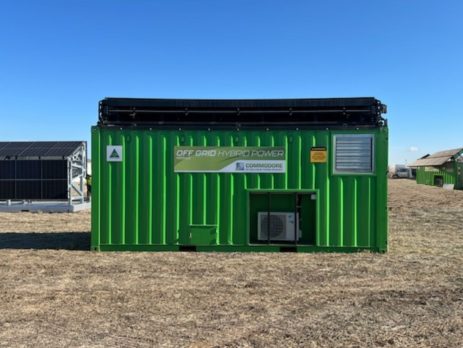
One recent example is Victron Microgrid, which Victron describes as a modular approach to larger off-grid power systems. According to Victron, the concept allows multiple independent inverter-charger systems, called “Power Banks”, to operate on a shared AC bus, with each unit maintaining its own batteries, charging and monitoring. Victron also says the approach is intended to support staged expansion and use cases such as construction sites, rental fleets, events and expanding existing off-grid systems.
The broader idea is interesting because it reflects where parts of the market are heading: toward more flexible, modular system architecture rather than one large centralised build. However, that should not be mistaken for a complete answer to every microgrid application. As with any emerging architecture, the real-world practicality depends on the use case, the operating constraints, and the technical limitations of the platform. Victron’s own material frames the concept around specific off-grid scenarios, not as a universal solution for every type of microgrid deployment.
In other words, modular microgrid architectures may reduce some traditional barriers, but they do not remove the need for proper engineering, careful system design and application-specific validation.
Is a microgrid the same as an off-grid solar system?
Not always.
A standard off-grid solar system might power a single building or a single load centre with solar, batteries and a backup generator. A microgrid usually refers to a coordinated local network of loads and distributed energy resources operating as one controllable system. In Australian regulatory discussions, that distinction can overlap with the broader category of stand-alone power systems.
So while every off-grid microgrid is off-grid, not every off-grid solar system is really a microgrid.
Are microgrids relevant in Australia?
Yes, especially in regional and remote applications.
Australia’s geography, remote communities, long feeder lines, off-grid industrial activity and diesel reliance create real use cases for microgrids and stand-alone systems. That is reflected in policy and funding activity, including ARENA’s Regional Microgrids Program and the AEMC’s work on stand-alone power systems.
The local relevance is not just theoretical. Government and network bodies in Australia, including the Victorian Government, actively describe microgrids as a practical option for local generation, storage and resilience in regional settings.
What should you consider before choosing a microgrid?
Before moving ahead with a microgrid project, it is worth stepping back and asking a few practical questions.
- What loads actually need to be supplied, and are they critical or non-critical?
- Is the goal resilience, fuel reduction, grid support, staged expansion, or a mix of these?
- What generation resources are available on site?
- How variable is the load profile across the day, week and season?
- What happens during black start, generator operation, maintenance or asset failure?
- How will the system be monitored, serviced and supported over time?
- Are there regulatory, ownership or customer supply issues that need to be addressed?
These questions go to the heart of whether a microgrid is the right fit, and what type of architecture makes sense.
The right answer might be a full microgrid. It might also be a simpler off-grid or hybrid system. The key is to choose an architecture that suits the application, not force the application to fit the architecture.
Final thoughts
Microgrids are not just an industry buzzword. They are a practical category of local power system that can improve resilience, support remote and regional energy access, reduce diesel dependence and make better use of distributed energy resources when designed properly. Government, research and regulatory bodies all treat them as a real and growing part of modern energy infrastructure.
At the same time, not every microgrid looks the same. Some are large, heavily controlled systems serving multiple customers or critical facilities. Others are moving toward more modular, scalable architectures aimed at off-grid and temporary applications. That shift is part of why the topic is attracting renewed interest right now, but the fundamentals still matter more than any one product announcement.


