Stop Wasting Diesel: How Smart Off-Grid Systems Replace the Need for Load Banks
For decades, load banks have played a vital role in maintaining diesel generators. In their simplest form, a load bank is an electrical device that simulates the power demand of real-world loads. By drawing current from the generator, it allows technicians to test performance and ensure the unit can deliver its rated capacity under safe, controlled conditions.
Load banks are especially common on sites where generators spend most of their life idling or running below capacity. In hospitals, data centres, and remote industrial facilities, large standby generators are installed for resilience but rarely experience full load in daily operation. When that happens, the engine does not reach proper operating temperature, fuel combustion becomes incomplete, and harmful residues build up. To counteract this, load banks are brought in to “exercise” the generator, forcing it to work harder and burn fuel more completely.
Why Under-Loading Is a Real Problem
A diesel generator is designed to work in its optimal range, typically between 60 and 80 percent of its rated capacity. Below that point, combustion becomes inefficient. Unburned fuel collects in the exhaust system, causing a condition known as wet stacking. Carbon builds up on injectors, valves, and turbochargers, leading to poor performance, higher emissions, and costly maintenance.
The situation is common on off-grid and remote sites where power demand fluctuates widely. A generator sized for the site’s peak load may spend long stretches running at just a fraction of that. Over time, the unit becomes less reliable, and servicing costs increase. In effect, an under-loaded generator is one that is slowly damaging itself.
How Load Banks Attempt to Fix It
The traditional solution has been to attach a load bank, an external device that converts electrical output into heat through resistors or other circuits. This creates an artificial demand that keeps the generator loaded properly, burning fuel cleanly and maintaining engine health.
It works, but it comes at a price. The energy drawn by a load bank produces no useful output, as it is simply dissipated as heat. That means every hour spent running a generator under load-bank test is an hour of fuel burned without powering anything. For standby units that rarely operate, this might be acceptable. But for remote or hybrid sites where generators run daily, it is an expensive and inefficient practice.
The Cost of Chasing Efficiency with Fuel
The irony of using a load bank is that it consumes energy purely to make a generator more efficient. Operators end up burning additional diesel to compensate for a mismatch between generation and demand. In a world where energy efficiency and emissions reduction are critical, that approach no longer makes sense.
Each hour of load-bank testing contributes to fuel waste, increased wear, and additional maintenance. Over a year, that can translate to thousands of dollars in unnecessary operating costs, not to mention the environmental impact. The smarter question is: why not address the underlying cause instead of treating the symptom?
A Smarter Alternative: Commodore’s Hybrid Off-Grid Systems
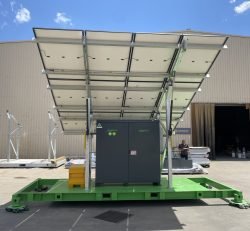
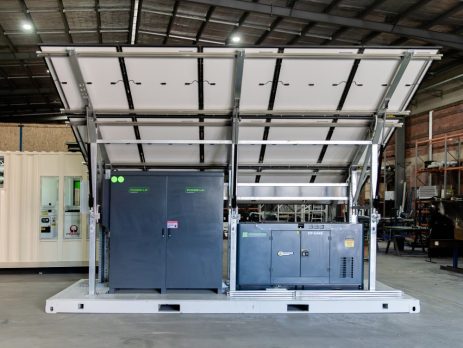
That is where modern off-grid and hybrid power systems come in. Rather than relying on a load bank to keep a generator healthy, Commodore’s off-grid systems are designed so the generator naturally runs at optimal load, but only for a few hours each day.
“A Commodore off-grid solution is better than a load bank,” explains Commodore General Manager, James Dainton. “Instead of keeping the generator running around the clock just to maintain efficiency, our systems allow it to operate at peak efficiency for only two to four hours a day.”
Here is how it works: solar panels provide the primary source of power, while a smart inverter and battery bank manage storage and distribution. When the batteries reach a pre-set level, the generator automatically starts and operates within its ideal efficiency range, typically between 60 and 80 percent load. During this short window, it powers the site and charges the batteries simultaneously. Once charging is complete, the generator shuts down, and the solar-battery system takes over again.
The result is a system that achieves everything a load bank aims to do, maintaining generator health and efficiency, but without wasting fuel or producing unnecessary emissions.
Turning Wasted Energy into Productive Power
With a conventional setup, a load bank might run the generator under artificial load for hours at a time, converting diesel into heat. In a Commodore hybrid system, that same energy is stored and reused. Every kilowatt produced by the generator goes toward powering equipment, charging batteries, or supporting renewable generation. Nothing is wasted.
This approach delivers immediate and measurable benefits:
- Reduced run time: Generators operate only two to four hours per day instead of continuously.
- Lower fuel costs: Sites typically see diesel consumption drop by up to 80 percent.
- Extended equipment life: The generator runs in its sweet spot, reducing wear and servicing frequency.
- Cleaner, quieter operation: Most of the day’s energy demand is met silently through solar and battery power.
When Load Banks Still Have a Role
Load banks are not disappearing entirely. They still serve a valid purpose in specific contexts such as commissioning new generator sets, verifying performance after major maintenance, or meeting compliance requirements for emergency standby systems. In these scenarios, temporary load testing remains good practice.
However, for daily operation on mining, construction or agricultural sites, the constant use of load banks to compensate for low demand is outdated. Modern hybrid systems eliminate the root cause of under-loading altogether.
The Bigger Picture: Efficiency by Design
Ultimately, the goal is not to make generators burn fuel more cleanly, it is to make them run less. Efficiency by design means using every litre of diesel for something productive, rather than burning it off to maintain engine health. Commodore’s off-grid range embodies that principle, integrating solar, battery storage, and generator automation into a seamless power ecosystem that works smarter, not harder.
By shifting from reactive maintenance to proactive system design, site operators gain reliability, sustainability, and lower lifetime costs. The days of running a generator all day just to keep it “happy” are over.
Conclusion
Load banks were a clever solution to a real problem, but that problem now has a better answer. Through intelligent hybrid systems, Commodore Australia allows generators to run fewer hours at higher efficiency, turning wasted fuel into stored energy and extending the life of every component in the process.
If your site relies on a generator that spends most of its time idling, it is time to rethink your power strategy. Speak with the Commodore Australia team to learn how a smart off-grid system can replace the need for load banks altogether.